
Donor Spotlight: Toris Jaeger
One Place to Land
April 22, 2026
Getting Wagner Ranch Ready for Its Return
June 18, 2026Toris Jaeger
She taught 15,000 students at Wagner Ranch over nearly five decades — and made the first donation to the Campaign for Wagner Ranch Nature Area.
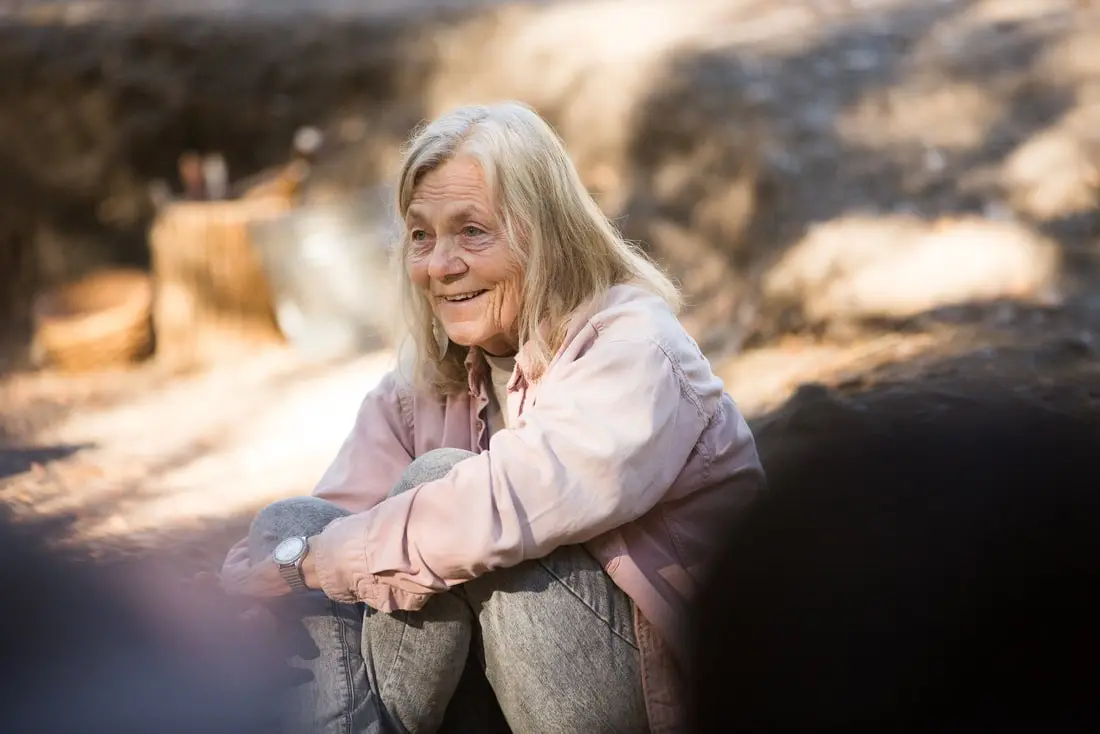
No one knows Wagner Ranch Nature Area better than Toris Jaeger. In 1978, she was hired as the Nature Area's naturalist.
Before the Nature Area closed because of storm damage in 2023, Toris taught more than 15,000 students over nearly five decades. Like the Nature Area itself, she has become a local treasure.
Today, at 82, she still gets stopped in grocery stores by adults who remember a lesson, a hike, or a discovery made as children under the oaks at Wagner Ranch.
Conversation with her naturally settles into teacher-student mode. And it’s fun to be the student! Did you know that of the defined ecosystems in the East Bay, 6 out of 7 can be observed and explored in this single 16-acre preserve?*
“I’m constantly running into people who tell me, ‘Toris, you have no idea the impact you had on my life or my children’s life,’” she says.
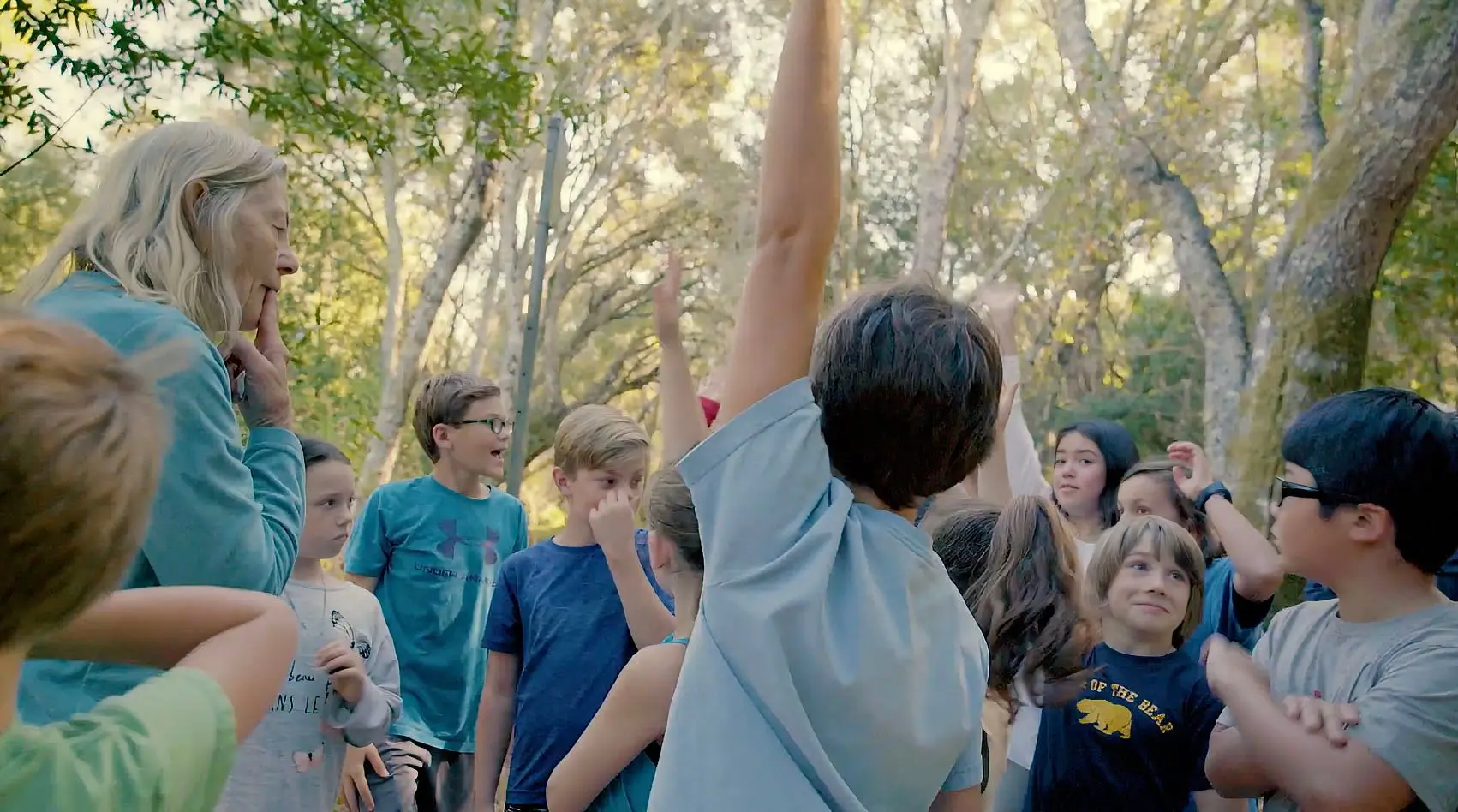
She cared about the whole kid, not just the curriculum. 'I've decided to live my life in peace and in respect,' she says. 'If you're with me, I'm going to expect that of you.'
Her classes focused on the ecosystems and the cultures that define the region’s past and present. “There is a main plant and a main animal that identifies each ecosystem,” Toris says. “For chaparral, the identification plant is the coyote brush, and the animal is the coyote. There’s oak woodland.” The Nature Area has three: two valley oaks and a live oak that are over 400 years old. “Oak woodlands provide the most food for the most species,” she says, “because of the acorns.”
Students learned about the foods consumed by each cultural group, too. “The kids loved preparing meals by collecting food from the garden, and then in the kitchen preparing it and serving it to everyone,” Toris says. “One group would cook and the other group would learn the history, and then the next day they switched.”
Toris believes the educational system is losing touch with the whole person. One day she asked a fourth grader, “What is the science of composting?” The answer: “Well, I don’t know the science, but I know when I come into the Nature Area, I feel more relaxed, and I can go back to my classroom and sit still for a while.”
In native studies, the kids loved the “quiet food game.” Girls could be hunters too. One person, the deer, goes down the trail and turns their back on everybody. The hunters then try to sneak up on the deer. If the deer puts up their hand because they hear noise, that hunter has to go back.
Kids interacting with each other and the world with all senses fully engaged. In person. Under trees.
On dirt and grass. That’s an experience a swipe on a screen can never match.
Some people would think all of this is a waste of time — that kids need to be buckling down and learning the contents of books. But once they’ve learned with the hands-on method, kids have told Toris they can supplement learning in nature with learning in the classroom.
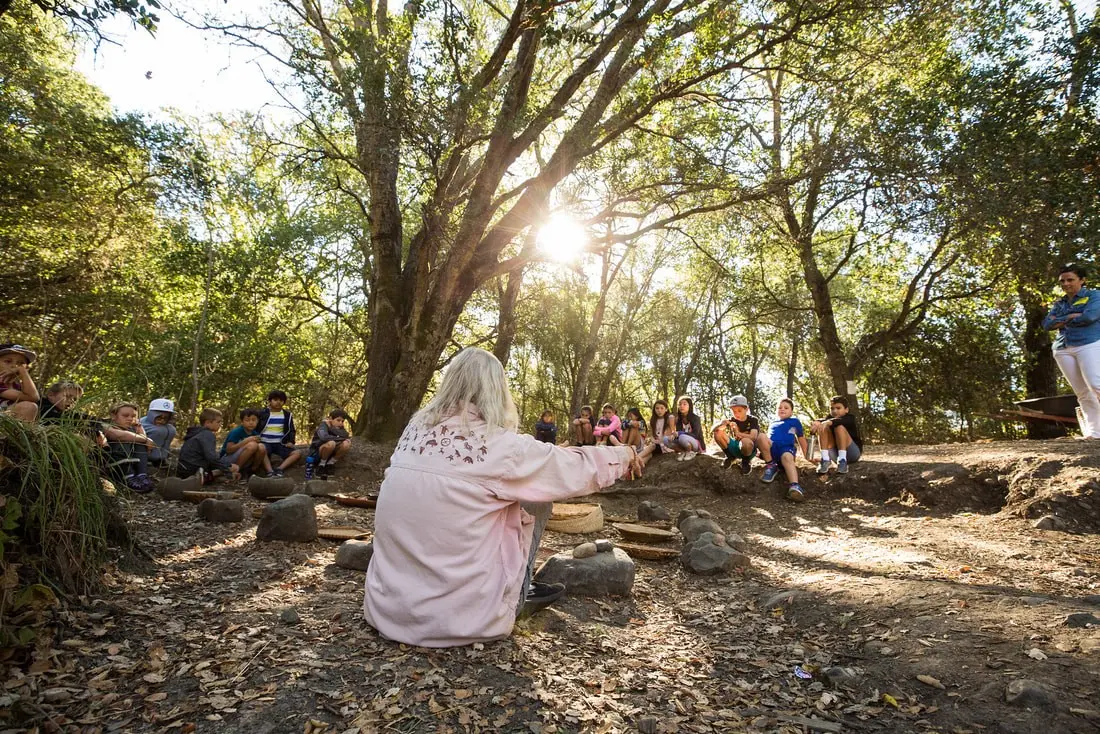
We thank Toris for teaching generations of kids to know and respect nature, and for making the campaign's first donation. We're getting closer to the day when Wagner Ranch opens to the whole community — kids bustling with excitement and questions, neighbors out for an evening walk.
See an interview with Toris on this episode of OpenRoad (timestamp: 10:00)
Join Toris — support the campaign →
*The 6 ecosystems are: chaparral, oak woodlands, grasslands, riparian, wetland, mixed woodland. Note: technically, the adjacent stream is not within the 16-acre parcel that is the new Wagner Ranch Nature Area. Missing is urban ecosystems (but we can find plenty of that elsewhere).